NEURAL DESIGN 1.0
NEURAL DESIGN FRAMEWORK
The Neural Design Framework was born in the early years of modern AI, when the idea of a machine capable of creating still belonged to speculation. Between 2014 and 2016, when deep learning was emerging from theory into open experimentation, we began exploring neural networks not as instruments of recognition, but as potential agents of generation. Even with RBMs and LSTMs the intention was already clear: to make them produce, not just classify. From those first fragile outputs — a few coherent words, a short musical sequence — the principle of Neural Design was formed. Creation itself became the method.
As generative AI advanced, Neural Design evolved with it. Each technological shift expanded our scope: adversarial networks introduced the idea of aesthetic synthesis; transformers revealed the latent structure of language; diffusion models brought coherence to imagery. At every stage, we adapted, learned, and redefined our practice. The aim was never to follow the industry, but to understand creation through intelligence — to study how machines learn to express. This continuity forged a singular position: Neural Design did not arrive after the revolution; it grew inside it, evolving with the same pulse that reshaped the field.
Through this evolution came a change in perspective. What began as a dialectic between human and machine — an almost competitive tension — matured into a view of symbiosis. We realized that the intelligence of design emerges not from one or the other, but from the interaction between the two. The human defines purpose, meaning, and context; the machine brings precision, acceleration, and structural insight. Together, they form a single creative process — capable of solving problems, constructing narratives, and generating visual or functional systems that exceed the limits of both sides alone.
Today, Neural Design stands as the synthesis of that long collaboration. It is not a laboratory of automation, but a framework of co-creation, where generative AI is treated as a cognitive partner — a way of thinking through design itself. Our work moves fluidly between art, communication, and engineering, but its core remains the same: to build with intelligence, not around it. In every project — whether visual, textual, or structural — we continue to explore a single question that has guided us since the beginning: how far can imagination go when intelligence learns to create with us, and not after us?
NEURAL DESIGN 2.0
GenAI EVOLUTION
RBM/LSTM
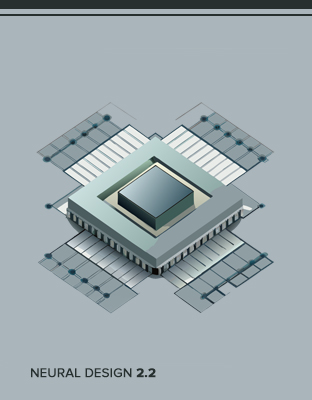
In the early stages of our AI lab, we focused on understanding the fundamentals of ANNs (artificial neural networks) through models like Restricted Boltzmann Machines (RBM) and Long Short-Term Memory (LSTM) networks. These primitive experiments, which generated simple texts and short MIDI files, showcased AI's ability to learn patterns and produce coherent outputs. However, it was the AGI hypothesis that truly hit us hard, redefining our focus and driving our research toward the pursuit of systems capable of general, adaptive intelligence. While our early studies demonstrated AI's creative and generative potential, they became stepping stones toward unraveling the deeper question of how intelligence itself could be generalized and scaled, which remains at the core of our mission.
VQ/GAN+CLIP
Our exploration of Generative Adversarial Networks (GANs) marked a significant milestone, as we harnessed their power to create complex and aesthetically pleasing digital content. This journey evolved further with the introduction of VQGAN+CLIP, which enabled even more refined and dynamic generative art. By utilizing platforms like Google Colab, we developed custom generative notebooks, democratizing access to these powerful tools and facilitating innovative artistic expressions. This phase represented a leap forward in our ability to merge creative vision with advanced AI techniques.
GenAI
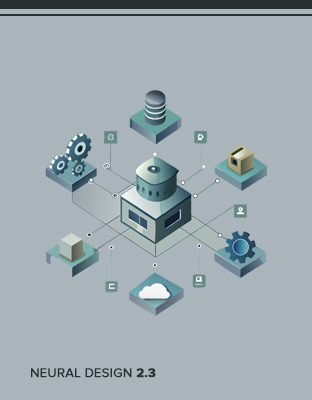
The generative AI industry truly consolidated when neural synthesis evolved beyond image diffusion into language-scale intelligence. Diffusion models proved that machines could generate high-fidelity images, but large language models (LLMs) transformed generation into a general reasoning paradigm. From that point, GenAI advanced rapidly—moving from text and images to coherent audiovisual generation, chain-of-thought reasoning, deep research pipelines, and autonomous coding agents. This marks a turning point: the end of GenAI’s first phase, focused on raw generation, and the beginning of a new era where AI becomes a system of cognition, collaboration, and discovery.